Retail stores have always battled theft, fraud, and operational losses — challenges that drain profits and disrupt operations. In 2026, however, retail loss prevention is being revolutionized by two powerful forces: CCTV surveillance and artificial intelligence (AI). Together, they’re reshaping how retailers detect, prevent, and respond to security threats in real-time.
From smart video analytics to facial recognition and behavior prediction, AI-driven CCTV systems are evolving beyond passive monitoring — they’re becoming proactive partners in retail loss prevention strategies. Let’s explore how this technology is redefining the future of store security, inventory management, and customer trust.
What Is Retail Loss Prevention and Why Does It Matter?
Before diving into the technology, let’s define retail loss prevention. It’s the process of reducing preventable losses that affect retail profits — including theft, shoplifting, employee fraud, and administrative errors.
According to the National Retail Federation, retailers lose billions annually due to shrinkage, which refers to the difference between recorded and actual inventory. This loss isn’t just from external theft — internal employee theft and process inefficiencies play a large part too.
That’s where retail loss prevention systems come in — tools, techniques, and policies designed to safeguard assets and reduce risk. Today, those systems are rapidly evolving with digital transformation.
The Role of CCTV in Retail Loss Prevention
For decades, Closed-Circuit Television (CCTV) has been the foundation of retail security. Traditional CCTV systems record footage that helps identify incidents after they occur. However, in 2026, CCTV is more than a passive recorder — it’s an intelligent, data-driven system integrated with AI that detects threats in real time.
Here’s how modern CCTV enhances loss prevention in retail stores:
1. Real-Time Monitoring and Alerts
AI-enhanced CCTV can analyze live video feeds to detect suspicious behavior such as lingering in restricted zones, unusual movement patterns, or repetitive visits to the same shelf.
2. Facial Recognition Technology
AI-powered cameras can identify known offenders or individuals previously caught shoplifting. When they enter the store, the system automatically alerts security teams to take preventive action.
3. Object and Motion Detection
Smart analytics distinguish between normal customer activity and suspicious motion, reducing false alarms and enabling faster response.
4. Integration with POS (Point of Sale)
Modern retail loss prevention systems connect CCTV with POS data. If a transaction looks unusual — for instance, multiple refunds or voids — the system automatically pulls relevant video footage for review.
How AI Is Revolutionizing Retail Loss Prevention Systems
AI has brought a new level of intelligence to security surveillance. Instead of relying solely on human monitoring, AI-driven retail loss prevention solutions analyze thousands of data points in seconds.
Here’s how AI enhances traditional retail security systems:
1. Predictive Analytics for Theft Prevention
AI algorithms can analyze behavioral patterns to predict potential theft before it happens. For example, if a shopper frequently glances at security cameras, avoids eye contact with staff, or conceals items, AI can flag the activity in real time.
2. Behavior Recognition
AI-powered vision systems learn to distinguish between typical shopping behavior and actions like concealment or tag tampering. This enables early intervention before losses occur.
3. Automated Incident Reporting
AI automates the process of reporting suspicious events, including timestamped footage and summaries, saving time for retail loss prevention specialists.
4. Enhanced Employee Accountability
Internal theft is a major source of shrinkage. AI-integrated CCTV can monitor employee activity around cash registers, stockrooms, or high-value areas, ensuring compliance with company policies.
5. Customer Insights and Operational Optimization
AI-powered analytics don’t just stop at theft prevention. They provide insights into foot traffic patterns, shelf interactions, and customer dwell time — helping retailers improve store layouts and customer experience.
Why AI + CCTV Is the Future of Retail Asset Protection
Traditional security measures often react after losses occur. AI-powered CCTV shifts this dynamic toward prevention. This fusion of surveillance and intelligence creates an ecosystem known as retail asset protection, where humans and machines collaborate to reduce shrinkage efficiently.
Let’s look at the major advantages driving this transformation:
1. Proactive Threat Detection
Instead of waiting for theft to occur, AI-enabled CCTV identifies risks before damage happens — improving both safety and profit margins.
2. Reduced Human Error
Security personnel can’t monitor every camera 24/7. AI ensures consistent monitoring, alerting human guards only when action is needed.
3. Cost Efficiency
While AI systems require upfront investment, they dramatically reduce operational losses, making them cost-effective over time.
4. Seamless Integration
AI-powered retail loss prevention solutions integrate with access control, alarm systems, and POS software, providing a unified platform for decision-making.
Real-World Example: AI CCTV in Retail
Imagine a large supermarket chain using AI-powered surveillance:
- A customer enters the electronics aisle and picks up several items, placing them into a personal bag instead of a cart.
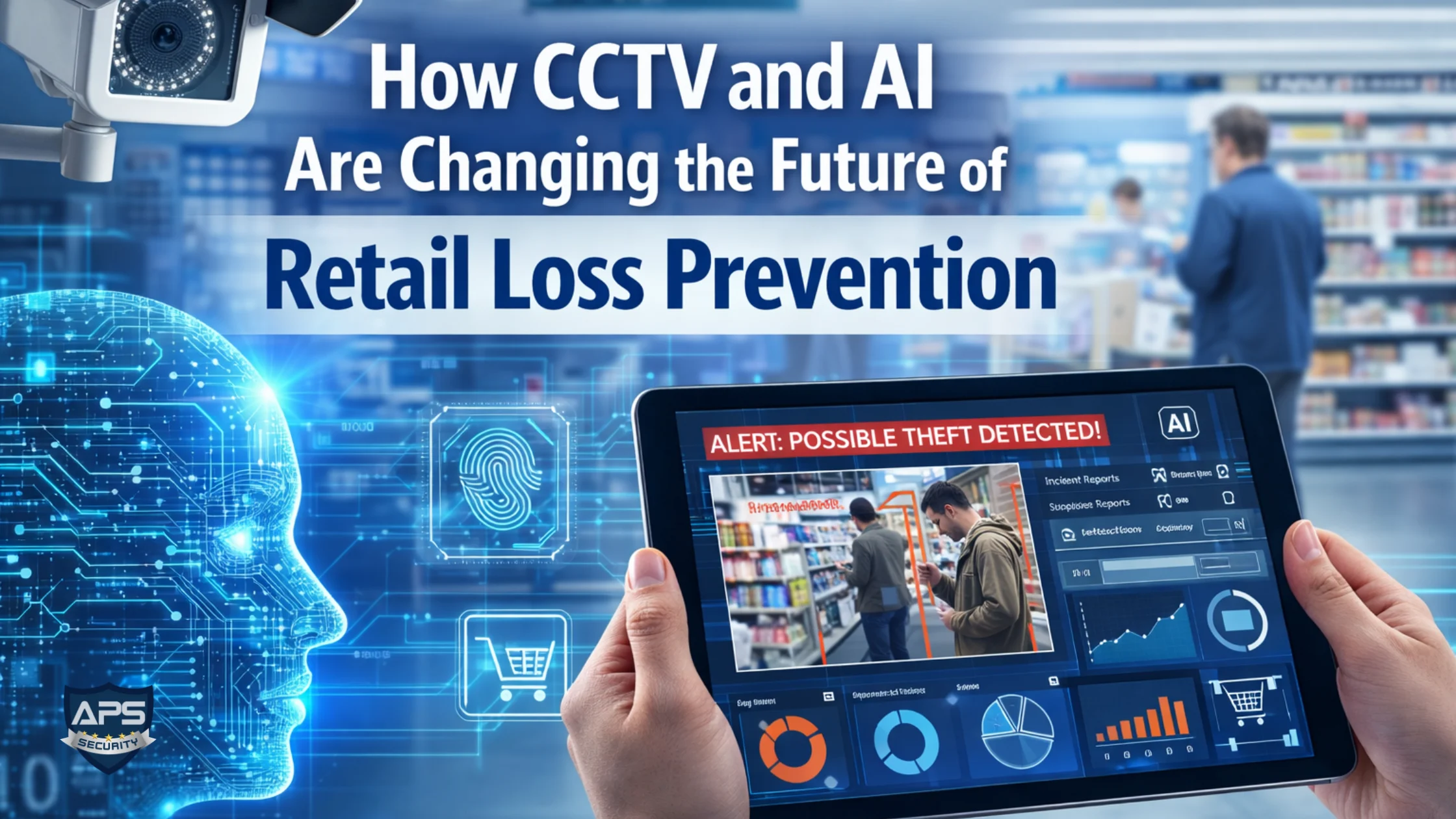
- The AI system recognizes the anomaly and immediately alerts the retail loss prevention specialist.
- Simultaneously, the system cross-references the person’s face with a database of prior offenders.
- Security receives the alert in real-time on a mobile device, allowing for discreet intervention before the customer leaves the store.
This proactive approach minimizes confrontation, reduces loss, and enhances the shopping environment for genuine customers.
How to Implement AI and CCTV in Retail Loss Prevention
Deploying AI-powered CCTV isn’t just about installing cameras. It requires strategic planning, system integration, and staff training.
Here’s a step-by-step approach to help retailers adopt these technologies effectively:
Step 1: Conduct a Security Audit
Identify high-risk areas — entrances, exits, cash counters, storage rooms, and blind spots. Determine where CCTV coverage and AI analytics will be most effective.
Step 2: Choose the Right CCTV Hardware
Select cameras with high resolution, night vision, and motion detection capabilities. Opt for IP-based systems that integrate easily with AI software.
Step 3: Integrate AI Software
Use software that supports real-time analytics, object recognition, and behavior monitoring. Ensure compatibility with your POS and access control systems.
Step 4: Train Security Personnel
Even with automation, human oversight is essential. Train retail loss prevention specialists to interpret alerts, analyze data, and take appropriate action.
Step 5: Maintain Compliance and Privacy Standards
AI and facial recognition systems must comply with local data protection laws. Always inform customers and employees about surveillance practices.
AI and CCTV: Strengthening Internal Theft Prevention
Employee theft accounts for a significant portion of retail shrinkage. AI and CCTV can mitigate this risk through advanced tracking and accountability mechanisms.
Key Features for Internal Security:
- POS Monitoring: AI detects unusual refund or discount activity.
- Stockroom Surveillance: Automated alerts for unauthorized access.
- Facial Recognition for Staff: Tracks entry and exit patterns.
- Audit Trail Creation: All incidents are automatically logged with timestamps for investigation.
By improving transparency, AI helps build a culture of trust while deterring potential misconduct.
Challenges and Ethical Concerns
While the benefits are clear, AI-powered surveillance comes with challenges:
1. Data Privacy Issues
Facial recognition requires storing sensitive data, raising privacy concerns. Retailers must ensure compliance with GDPR or equivalent local regulations.
2. False Positives
AI systems may occasionally flag innocent behavior as suspicious. Continuous model training and human verification minimize this issue.
3. Cost of Implementation
High-end AI CCTV systems can be expensive, especially for small retailers. However, modular deployment can help scale solutions gradually.
4. Staff Resistance
Employees may feel uneasy about constant surveillance. Transparent communication about the purpose — protection, not policing — is key.
The Role of Human Security Teams in an AI-Driven Era
While AI enhances efficiency, human expertise remains irreplaceable. Trained personnel — such as a loss prevention security guard — provide judgment, empathy, and on-ground response that machines cannot replicate.
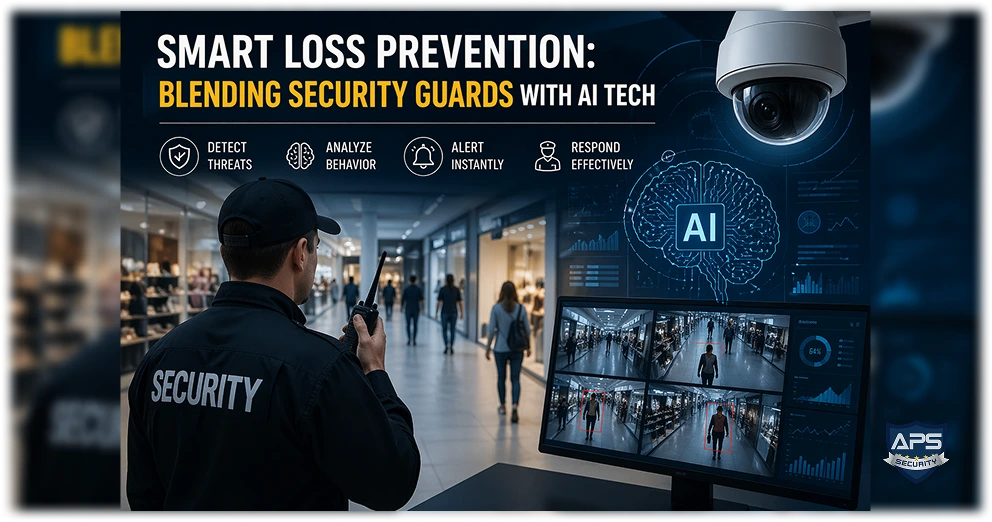
In fact, the best approach combines both worlds: AI handles the data and detection; humans handle decision-making and resolution. Security firms like APS Security leverage this hybrid model to provide proactive, tech-enabled protection to retailers across Canada.
Emerging Trends in Retail Loss Prevention Technology
The evolution of retail security is continuous. Here are some trends shaping the next generation of retail loss prevention strategies:
1. Edge AI Processing
Instead of sending data to a central server, cameras process information locally (on the edge), enabling faster detection and reduced bandwidth use.
2. Cloud-Based Surveillance Systems
Retailers are adopting cloud storage for scalability, remote access, and real-time collaboration between multiple store locations.
3. Multisensor Fusion Cameras
Combining thermal, optical, and motion sensors enhances visibility even in challenging environments.
4. AI-Powered Customer Service Bots
Security bots can assist customers while monitoring for suspicious behavior — blending service and safety.
5. Predictive Maintenance
AI monitors CCTV health, alerting teams when a camera or sensor needs repair, ensuring continuous surveillance coverage.
Benefits of AI and CCTV Integration for Retailers
| Benefit | Description |
| Reduced Shrinkage | Real-time alerts prevent theft and fraud before losses occur. |
| Enhanced Safety | Protects customers, staff, and inventory. |
| Better ROI | Long-term savings through reduced losses and improved operations. |
| Data-Driven Insights | Analytics support smarter staffing, merchandising, and layout decisions. |
| Faster Incident Resolution | AI-generated summaries accelerate investigations. |
What Does the Future Hold for Retail Loss Prevention?
By 2026 and beyond, AI and CCTV will become even more interconnected, paving the way for autonomous retail loss prevention systems. These systems will self-learn, adapt to new threats, and communicate across multiple stores simultaneously.
Moreover, as smart cities and IoT networks expand, retailers will benefit from shared data ecosystems — connecting store security with community policing and real-time crime mapping.
The future of retail asset protection is intelligent, collaborative, and data-driven.
FAQs About CCTV and AI in Retail Loss Prevention
1. What is AI-powered CCTV in retail?
AI-powered CCTV uses artificial intelligence to analyze video footage, detect suspicious activity, and send real-time alerts to prevent theft or fraud.
2. How do AI and CCTV improve retail loss prevention systems?
By combining real-time monitoring with predictive analytics, these systems identify risks early, allowing security teams to intervene before losses occur.
3. Can small retailers afford AI-based CCTV?
Yes. Many vendors now offer scalable, subscription-based models that make AI-powered CCTV accessible to small and medium-sized businesses.
4. Does AI replace human security guards?
No. AI enhances their effectiveness by reducing manual monitoring and allowing guards to focus on real interventions and customer engagement.
5. How secure is customer data in AI surveillance?
When implemented correctly with encryption and compliance standards, AI systems securely handle and store sensitive information.
Conclusion
In the evolving world of retail, AI and CCTV are no longer just security tools — they’re intelligent partners in preventing losses and enhancing operations. From real-time analytics to predictive theft detection, these systems empower retailers to act before losses occur.
By combining technology with human expertise, retailers can create safer environments, protect assets, and gain valuable insights for business growth.
As AI continues to evolve, retail loss prevention will shift from reactive protection to proactive intelligence — where every camera is a sensor, every frame is data, and every insight is an opportunity to stay one step ahead of theft.