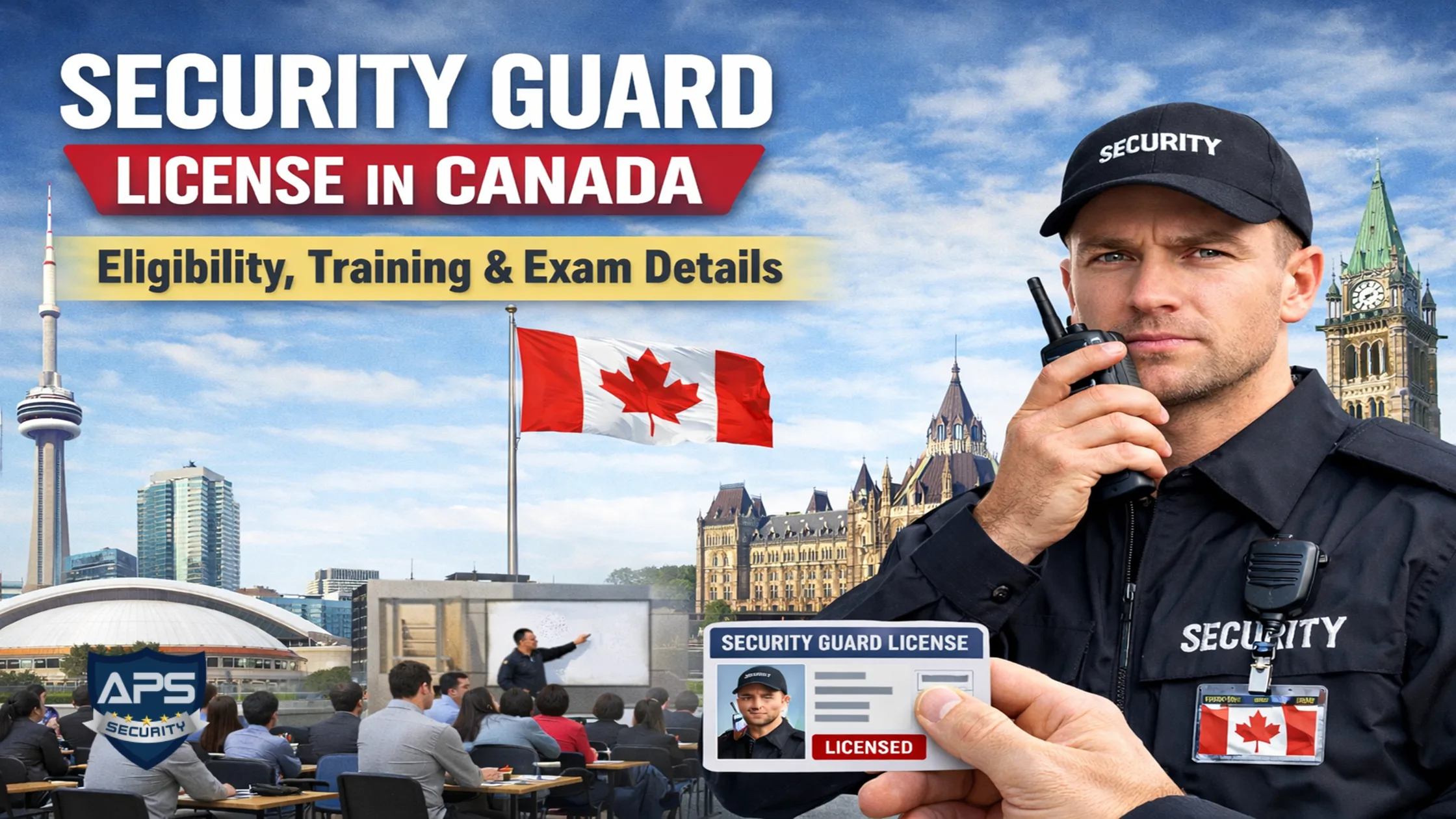
If you are planning to work legally in the private security sector, obtaining a security guard license in Canada is mandatory in every province and territory. Whether you are a student, immigrant, or career switcher, understanding the licensing process is the first step toward employment in malls, hospitals, corporate offices, construction sites, and events.
The security guard license in Canada is regulated at the provincial level. That means each province has slightly different training hours, exam formats, and application procedures. However, the overall process—eligibility, mandatory training, exam, background check, and license issuance—remains similar across the country.
Why You Need a Security Guard License in Canada
In Canada, working as a private security professional without a valid license is illegal. The industry is regulated at the provincial level to ensure public safety, accountability, and professional standards. Each province has its own governing legislation, including:
- Ontario: Private Security and Investigative Services Act
- British Columbia: Security Services Act
- Alberta: Security Services and Investigators Act
Because licensing is mandatory, obtaining a Canadian security guard license is not just a formality—it is a legal requirement that confirms you meet provincial standards.
A valid license ensures that:
- You have successfully passed a criminal background check
- You completed mandatory, government-approved training
- You understand use-of-force laws and emergency response procedures
- Employers can legally hire you for security roles
As of 2025, Canada’s private security industry employs over 160,000 licensed guards nationwide (industry estimates). Demand continues to grow steadily, especially in retail, healthcare, construction, logistics, and large-scale event security.
Eligibility for Security Guard License in Canada
Before applying for a security guard license in Canada, you must meet the following basic requirements:
1. Minimum Age
- Most provinces require applicants to be 18 years old.
- British Columbia requires applicants to be 19 years old.
2. Legal Status in Canada
You must be:
- A Canadian citizen
- Permanent resident
- Valid work permit holder
3. Clean Criminal Record
A criminal background check is mandatory. Serious criminal convictions may result in rejection.
4. Language Proficiency
You must demonstrate basic English (or French in Quebec) reading and writing skills to pass the licensing exam.
How to Get Security Guard License in Canada
If you’re wondering how to get security guard license in Canada, here is the simplified step-by-step roadmap:
Step 1: Complete Mandatory Security Guard Training
Training hours vary by province:
| Province | Required Training Hours |
| Ontario | 40 hours |
| British Columbia | 40 hours |
| Alberta | 40 hours |
| Manitoba | 40 hours |
| Saskatchewan | 40 hours |
| Nova Scotia | 40 hours |
The training includes:
- Legal authorities and responsibilities
- Canadian criminal law basics
- Emergency response
- Communication skills
- Use of force theory
- Report writing
This foundational security guard training must be completed through a government-approved provider.
Step 2: Obtain Training Completion Number (TCN)
After finishing the course, you’ll receive a certificate or Training Completion Number. This is required to book your licensing exam.
Step 3: Pass the Provincial Exam
The licensing exam tests your understanding of laws and procedures.
Ontario Exam Example:
- 60 multiple-choice questions
- 75% passing score
- 75 minutes time limit
The exam typically costs CAD $35–$75, depending on the province.
Step 4: Apply for Your Security Guard License
After passing the exam:
- Submit application online
- Provide ID documents
- Upload photo
- Complete background check
- Pay application fee (CAD $80–$160 depending on province)
Processing time:
- 10–30 business days (varies by province)
Once approved, you receive your official Canada security guard license card.
Provincial Breakdown of Security Guard License in Canada
Since licensing is provincial, here’s a closer look at major provinces:
Ontario Security Guard License
In Ontario, licensing is managed by the Ministry of the Solicitor General.
Key details:
- 40-hour training
- 60-question exam
- License valid for 2 years
- Application fee: approx. CAD $80
Ontario has over 90,000 licensed guards, making it the largest security employment market in Canada.
British Columbia Security Guard License
In British Columbia:
- Minimum age: 19
- 40-hour Basic Security Training (BST)
- Provincial exam required
- License valid for 2 years
BC’s security sector is strong in Vancouver’s commercial, tourism, and event industries. Many professionals seek employment with the best security services in British Columbia after licensing.
Alberta Security Guard License
In Alberta:
- 40-hour training required
- Provincial exam
- Criminal record check mandatory
- License valid for 2 years
Alberta’s oil & gas and industrial sectors create steady demand for licensed guards.
What Does Security Guard Training Include?
Mandatory training for a security guard license in Canada is designed to equip candidates with both practical skills and legal knowledge required to work professionally and lawfully. The program ensures that every applicant understands their authority limits, responsibilities, and how to respond effectively in real-world situations. This structured training helps prepare individuals for the provincial licensing exam and for on-the-job challenges.
Core Modules Covered in Security Guard Training:
- Canadian Criminal Code Basics – Understanding legal authority, use of force, and citizen’s arrest provisions.
- Arrest Procedures – Lawful detention, documentation, and handling suspects safely.
- Charter of Rights and Freedoms – Respecting individual rights while performing security duties.
- Emergency First Response – Basic emergency protocols, incident reporting, and coordination with police or medical services.
- Report Writing – Writing clear, accurate, and legally sound incident reports.
- Conflict De-escalation – Communication strategies to reduce tension and prevent violence.
- Professional Conduct – Ethics, appearance standards, workplace behavior, and public interaction.
In addition to classroom learning, many training providers include scenario-based simulations, real-life case studies, and mock exams. These practical exercises help students gain confidence and improve their chances of successfully obtaining their security guard license in Canada.
Security Guard License in Canada: Costs Breakdown
Here’s an estimated total cost:
| Expense | Estimated Cost |
| Training Program | CAD $200–$600 |
| Exam Fee | CAD $35–$75 |
| License Application | CAD $80–$160 |
| Background Check | CAD $20–$50 |
Total Estimated Cost: CAD $350–$850
Costs vary by province and training provider.
How Long Does It Take to Get a Security Guard License in Canada?
The time required to obtain a security guard license in Canada depends on your province, exam availability, and how quickly you submit your documents. In most cases, the entire process—from enrolling in training to receiving your license card—takes between one to two months.
Here’s a typical timeline breakdown:
- Training: 1–2 weeks
(40-hour mandatory course completed online or in-class) - Exam Booking: 1–3 weeks
(Depends on test center availability in your province) - License Processing: 2–4 weeks
(Includes background check and application review)
Total Estimated Time: 4–8 weeks
If you complete your training quickly and book your exam early, you may receive your Canadian security guard license in as little as four weeks. Delays usually happen due to incomplete applications or high exam demand periods.
Common Mistakes to Avoid
Applying for a security guard license in Canada is a structured process, but many applicants face delays or rejections due to avoidable mistakes. Understanding these common errors can save you time, money, and unnecessary stress. Whether you’re applying for your first Canadian security guard license or renewing an existing one, paying attention to the details is crucial.
Here are the most common mistakes to avoid:
- Choosing non-approved training providers
Not all training institutes are government-approved. Enrolling in an unrecognized course can make your certificate invalid and delay your license application.
- Ignoring exam preparation
Many candidates underestimate the licensing exam. Failing to study key topics like legal authority, use of force, and report writing can result in failed attempts and extra fees.
- Submitting incomplete documents
Missing ID proofs, incorrect forms, or poor-quality photo uploads can cause application rejection or processing delays.
- Not checking provincial-specific rules
Licensing requirements vary by province. Always confirm training hours, age limits, and application procedures before applying.
- Missing renewal deadlines
Most licenses are valid for two years. Failing to renew on time may require reapplication and additional background checks.
Avoiding these mistakes will help you secure your security guard license in Canada smoothly and start your career without setbacks.
Career Growth After Getting Security Guard License in Canada
Earning your security guard license in Canada is just the beginning of your professional journey. Once licensed, you gain access to multiple career pathways within the private security industry. With experience, strong performance, and additional certifications, you can steadily move into higher-paying and supervisory roles.
Once Licensed, You Can Advance Into:
After gaining on-the-job experience, many guards transition into specialized or leadership positions such as:
- Mobile Patrol Officer – Conducting vehicle patrols across multiple properties and responding to alarms.
- Loss Prevention Officer – Working in retail environments to prevent theft and fraud.
- Site Supervisor – Managing a team of guards at a specific location and handling shift coordination.
- Security Operations Manager – Overseeing large contracts, client communication, and operational planning.
- Private Investigator (separate licensing required) – Conducting investigations related to insurance, legal, or corporate matters.
These roles often offer higher hourly wages and more stable full-time opportunities compared to entry-level positions.
With Additional Certification, You Can Specialize In:
Many provinces encourage continuing education. By upgrading your skills, you can qualify for more advanced assignments:
- Use of Force Training – Required for positions involving enhanced authority or equipment.
- First Aid & CPR Certification – Highly valued in hospitals, schools, and public venues.
- Crowd Control & Event Security – Ideal for concerts, sports events, and festivals.
- Armed Security (where legally permitted) – Requires additional licensing and strict background checks.
Investing in professional development not only increases your income potential but also improves long-term career stability in Canada’s growing security sector.
FAQs
1. How long is a security guard license valid in Canada?
Most provinces issue licenses valid for 2 years.
2. Can I work in another province with the same license?
No. Licensing is provincial. You must apply separately if moving provinces.
3. Is first aid mandatory?
Some employers require CPR/First Aid certification even if not mandatory for licensing.
4. What happens if I fail the exam?
You can retake the exam after paying the re-examination fee.
5. Can I apply online?
Yes. Most provinces allow online applications.
6. Do I need Canadian experience before applying?
No prior experience is required to apply for a security guard license in Canada.
Final Thoughts
Getting a security guard license in Canada is a straightforward but regulated process. With mandatory training, a provincial exam, and background verification, the system ensures that only qualified professionals enter the industry.
If you’re serious about entering the security sector, understanding how to get a security guard license in Canada will save time, money, and unnecessary delays. The demand for licensed guards continues to grow across retail, healthcare, industrial, and event sectors.
By completing your training, passing the exam, and maintaining compliance, you can build a stable and rewarding career in Canada’s expanding private security industry.