
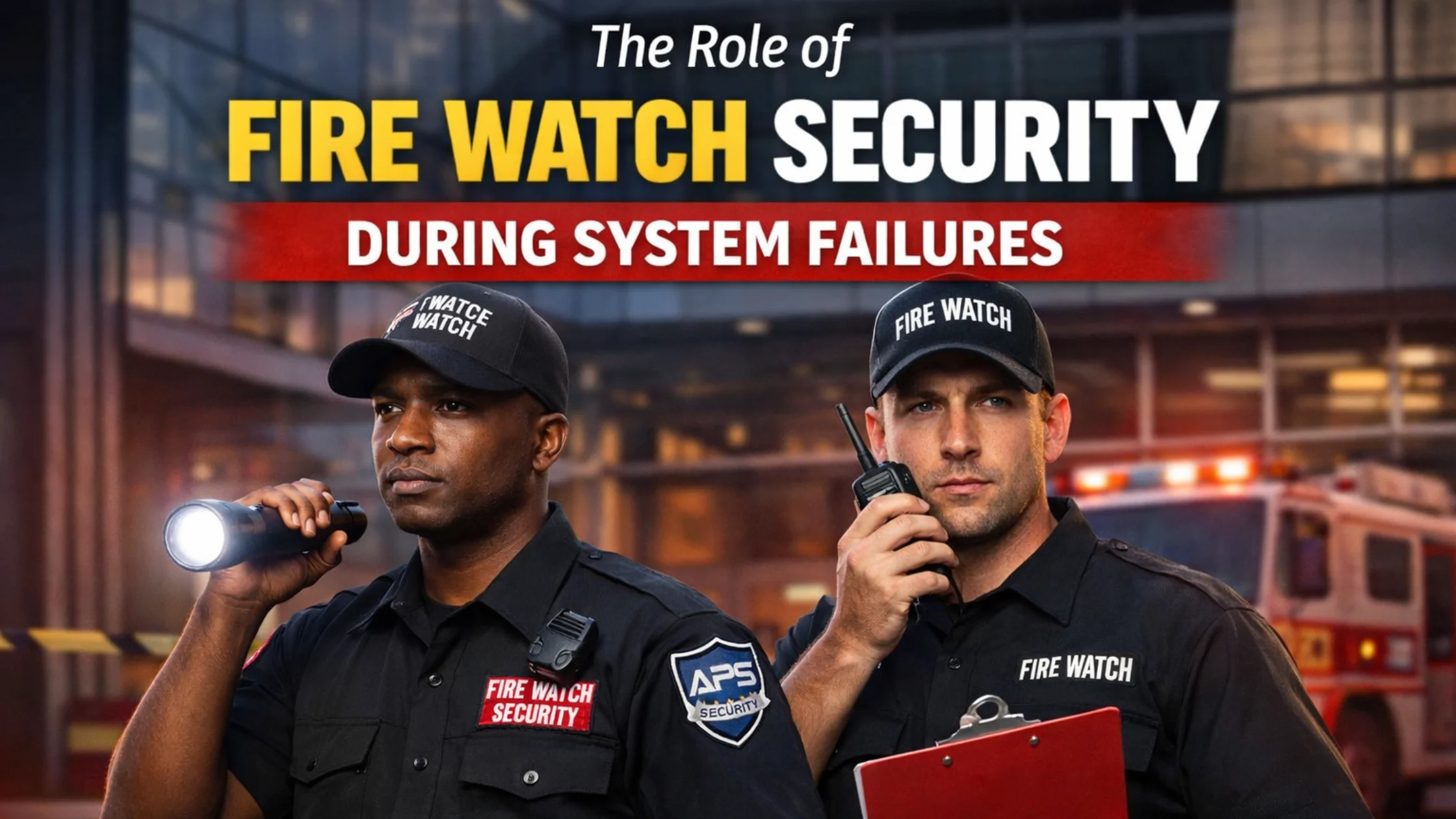
When fire alarms, sprinkler systems, or suppression systems fail, Fire Watch Security becomes the frontline defense against catastrophic loss. During system failures, having trained fire watch professionals on-site is not just a precaution—it is often a legal requirement. Fire incidents can escalate within minutes, and without early detection, property damage and loss of life can be severe.
According to the National Fire Protection Association (NFPA), fire departments respond to over 1.3 million fires annually, causing billions of dollars in property damage. A malfunctioning alarm or sprinkler system significantly increases the risk. That’s where fire watch security plays a critical role: providing active monitoring, immediate response, and regulatory compliance until systems are restored.
In this blog, we’ll explore how Fire Watch Security operates during system failures, why it is mandatory in many cases, and how it protects businesses, construction sites, and residential buildings.
What Is Fire Watch Security?
Fire watch security refers to trained personnel assigned to monitor a property when fire detection, alarm, or suppression systems are offline. These guards patrol designated areas, identify fire hazards, and respond immediately if smoke or flames are detected.
Unlike passive systems, fire watch guards provide active human oversight. Their responsibilities typically include:
- Conducting continuous patrols (often every 15–30 minutes)
- Checking high-risk areas like electrical rooms and storage spaces
- Maintaining detailed logs for fire department review
- Contacting emergency services if needed
- Ensuring fire exits remain unobstructed
Fire departments and local authorities often require documented fire watch services when systems are down for more than four hours within a 24-hour period.
Why Fire Watch Security Is Essential During System Failures
1. Immediate Risk Mitigation
When alarm or sprinkler systems fail, the building loses its automatic detection and suppression capability. Fires can double in size every 30–60 seconds. Fire Watch Security compensates for this gap by ensuring rapid human detection and faster emergency response.
2. Legal and Insurance Compliance
Many municipalities follow NFPA-based fire codes. If a system fails, building owners must notify local authorities and arrange fire watch services. Failure to comply can result in:
- Fines and penalties
- Forced building evacuation
- Insurance claim denials
Insurance providers often require documented fire watch logs during outages to validate coverage.
3. Business Continuity
Without Fire Watch Security, some facilities must shut down during prolonged system failures. For hospitals, hotels, manufacturing plants, and data centers, downtime can cost thousands of dollars per hour. Fire watch services allow operations to continue safely while repairs are underway.
4. Construction Site Protection
Construction sites are particularly vulnerable. Temporary wiring, welding, and flammable materials increase the risk of ignition. During system outages, Fire Watch Security ensures continuous monitoring and immediate intervention if hazards arise.
Common Scenarios That Require Fire Watch Security
Understanding when Fire Watch Security is required helps businesses prepare proactively.
Fire Alarm System Malfunction
A power surge, wiring issue, or control panel failure can disable the alarm system. Until repairs are complete, fire watch personnel must patrol the premises.
Sprinkler System Shutdown
Sprinkler systems may be offline due to maintenance, pipe leaks, or renovations. In high-rise buildings, this presents a major hazard.
Power Outages
Extended power failures can render fire detection systems inoperable, especially in older buildings without adequate backup systems.
Renovations and Hot Work Operations
Welding, cutting, and grinding significantly increase fire risk. Fire watch guards are often required to monitor areas during and after hot work activities.
Duties and Responsibilities of Fire Watch Personnel
The effectiveness of Fire Watch Security depends on training, vigilance, and structured protocols.
Continuous Patrols
Guards patrol all accessible areas, including stairwells, basements, mechanical rooms, and rooftops. Patrol frequency is determined by local fire codes.
Hazard Identification
Fire watch personnel monitor for:
- Overloaded electrical circuits
- Improperly stored flammable materials
- Blocked emergency exits
- Malfunctioning equipment
Detailed Reporting
Accurate documentation is essential. Reports typically include:
- Time of patrol
- Areas inspected
- Hazards identified
- Corrective actions taken
Authorities may review these logs during inspections.
Emergency Response
If smoke or fire is detected, fire watch guards:
- Activate available manual alarms
- Contact emergency services immediately
- Assist with safe evacuation procedures
Quick action can significantly reduce damage and risk to occupants.
Industries That Depend on Fire Watch Security
Healthcare Facilities
Hospitals and clinics cannot afford system downtime. Patients with limited mobility require organized evacuation plans.
Hotels and Hospitality
Hotels must ensure guest safety around the clock. A failed system during peak occupancy increases liability risks.
Industrial and Warehousing
Facilities storing chemicals, fuel, or combustible goods face elevated fire hazards, making Fire Watch Security essential during outages.
Residential High-Rises
High-density living spaces require constant monitoring when alarm or sprinkler systems are not functioning.
How to Choose a Reliable Fire Watch Security Provider
Selecting the right Fire Watch Security company is crucial for compliance and protection.
Licensed and Insured
Ensure the provider complies with local regulations.
Properly Trained Personnel
Guards should be trained in fire safety procedures and emergency response protocols.
24/7 Availability
System failures can happen at any time. Rapid deployment is essential.
Detailed Documentation
Professional reporting supports regulatory compliance and insurance validation.
Cost of Fire Watch Security During System Failures
Costs vary depending on:
- Property size
- Duration of service
- Number of guards required
- Risk level
Commercial fire watch services often range between $20–$50 per hour per guard depending on region and complexity. Compared to potential fire damage, business interruption losses, and liability claims, this cost is a proactive investment in risk management.
Fire Watch Security and Regulatory Compliance
When fire protection systems are down, property managers should:
- Notify the local fire authority
- Implement Fire Watch Security immediately
- Maintain written patrol logs
- Restore systems as quickly as possible
Non-compliance may result in citations or temporary building closure.
Best Practices During Fire System Failures
To maximize safety during outages:
- Inform occupants about temporary safety measures
- Ensure fire extinguishers are accessible
- Keep evacuation routes clear at all times
- Restrict high-risk activities
- Coordinate closely with fire watch personnel
A structured response reduces panic and improves overall safety outcomes.
The Future of Fire Watch Security
While smart building technologies and automated detection systems continue to advance, human oversight remains essential during failures. Electrical faults, maintenance issues, and unexpected outages can compromise even the most advanced systems.
A hybrid approach—combining automated systems with professional Fire Watch Security—offers the highest level of protection.
Frequently Asked Questions (FAQs)
1. When is Fire Watch Security required?
It is typically required when fire alarm or sprinkler systems are non-functional for more than four hours within a 24-hour period.
2. Who can perform fire watch duties?
Trained and licensed security personnel who understand fire safety procedures and emergency response protocols.
3. How often are patrols conducted?
Patrol frequency depends on local fire codes, commonly every 15–30 minutes.
4. Can a building operate without fire watch during system failure?
In many cases, no. Authorities may mandate fire watch services to allow continued occupancy.
5. Is Fire Watch Security necessary for short-term repairs?
If the fire protection system is fully offline, fire watch may still be required, even for temporary outages.
Conclusion
System failures are unpredictable, but fire risks are constant. Fire Watch Security ensures that when automated protection systems fail, trained professionals step in to monitor, detect, and respond. From regulatory compliance to real-time hazard identification, fire watch services protect lives, property, and business operations.
Investing in professional Fire Watch Security during system failures is not just about meeting legal requirements—it’s about responsible risk management and proactive safety leadership.